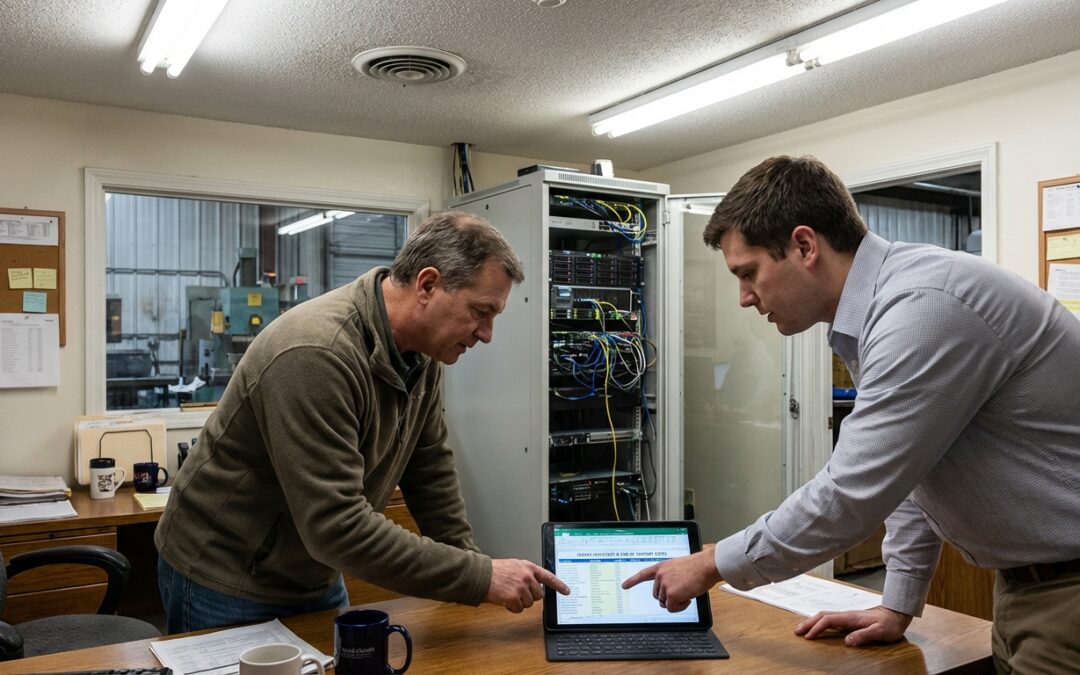
Every business has at least one piece of technology everyone is afraid to touch. It still works, sort of. It runs something important. Nobody feels good about it, but nobody wants to own the replacement either.
That is legacy debt. And in Anderson, Muncie, and the rest of East Central Indiana, it shows up all the time in older servers, unsupported firewalls, stale line-of-business apps, and backup systems nobody has actually tested in months.
A legacy debt audit is simply a way to bring those hidden risks into the open before they choose the timing for you.
Risk one, unsupported edge devices
If you want to find the highest-leverage risk fast, start at the front door. Firewalls, VPN appliances, and internet-facing routers matter more than the random printer in the back office. When those devices hit end of support, they stop receiving security fixes. That means the most exposed part of your environment is also the hardest to defend.
Make a list of every internet-facing device, check support status, and flag anything that cannot run current firmware. If it sits at the perimeter, age matters more.
Risk two, business-critical systems that cannot be patched
Old server operating systems and obsolete applications become dangerous when the business still depends on them. We are not talking about museum pieces in a closet. We are talking about the old box that still runs production, accounting, or manufacturing workflows. Once patching stops, every future vulnerability stays in play.
This is where lifecycle planning and a business continuity strategy should meet. If replacing the system takes time, isolate it, control access tightly, and put a real migration date on the calendar.
Risk three, supported systems with neglected basics
This is the sneaky one. The hardware is not ancient, but the basics have drifted. Patches slip. Old admin accounts stay active. Services nobody needs are still running. Backup jobs say successful, but nobody has proven the restore. That is not just sloppy IT. It is how ordinary days become long outages.
For many small businesses, this is where a managed IT department approach helps most. You need repeatable maintenance, not heroics.
A simple legacy debt audit checklist
- List every server, firewall, and key network device with warranty and support status.
- Identify systems that still matter to operations but cannot be updated safely.
- Review patch compliance, admin rights, and backup restore testing.
- Assign an owner and replacement timeline for each high-risk item.
- Document what happens if the system fails tomorrow.
Do not wait for the emergency budget
The worst time to replace old technology is after it has already created downtime. A legacy debt audit gives you the chance to make decisions on your schedule, not during a crisis. It also makes it easier to prioritize what matters now, what can wait, and what needs an immediate workaround.
If your team has a growing pile of old infrastructure and too little time to sort it out, contact Hoola Managed IT or call (765) 233-2338. We help Anderson and East Central Indiana businesses turn scary old systems into a clear action plan.